F*ck, I'm a Penguin
This article is based on the original post available on X.
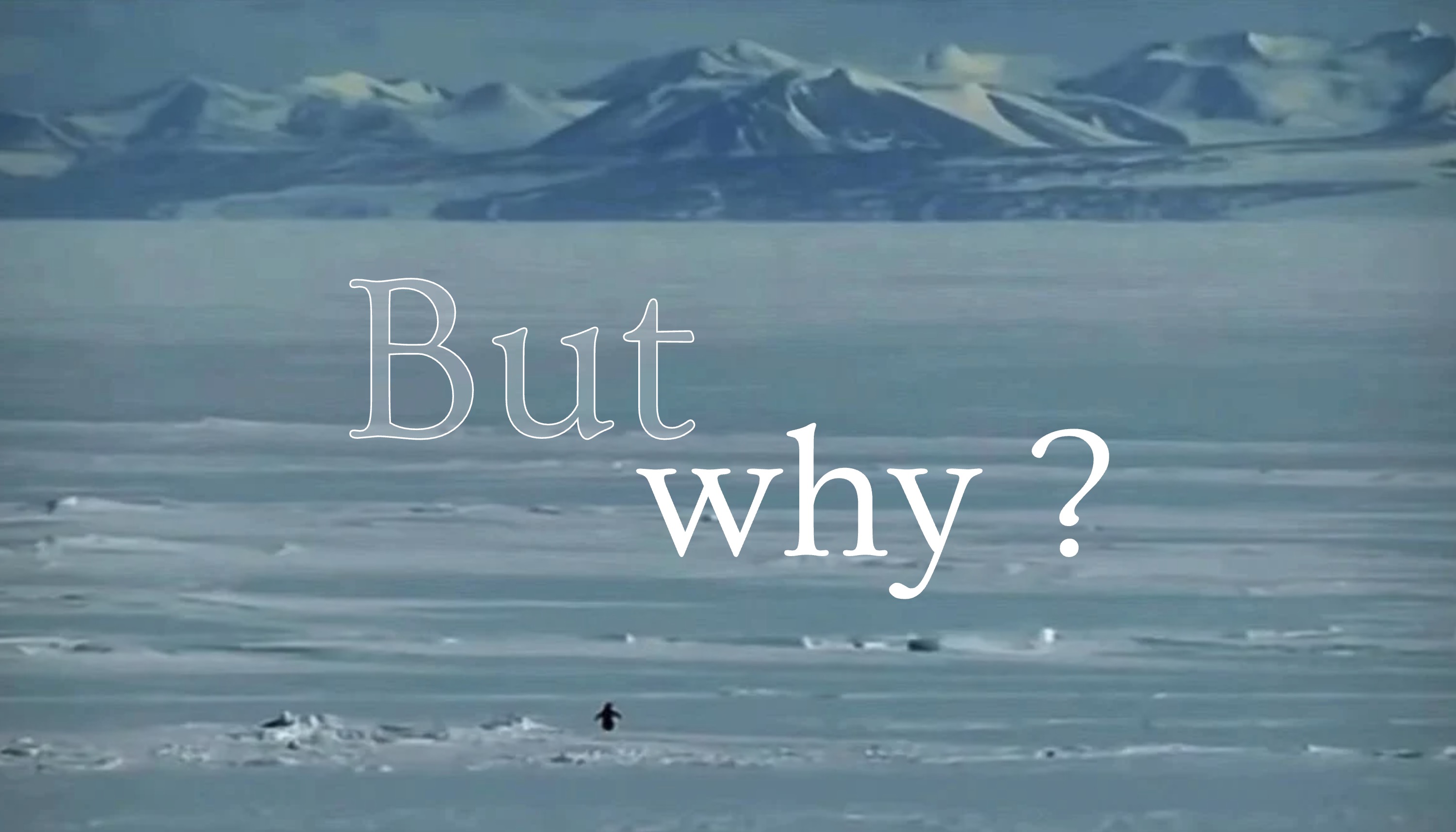
I finally found a video that explains me better than I ever could (stay with me cause it could end up being the same for you).
It’s a short scene from Encounters at the End of the World. A penguin suddenly breaks away from the colony. While the others head toward the ocean (food, safety, predictability..) this one penguin turns in the opposite direction and starts walking alone toward the Antarctic interior.
When this clip started going viral, people joked about it, “The suicidal penguin” they said.
I saw something else entirely. I saw myself.
Why everyone thinks you’re crazy
When you decide to build something of your own, the reactions are almost always the same:
- Why don’t you take a stable job first?
- Why not wait until the timing is better?
- Why leave something that already works?
From the outside, staying with the group looks like common sense. I mean, evolutionarily it is. The group means warmth, food, shared risk, and survival. The group is optimized for not dying.
But here’s the uncomfortable truth: as I just said the group is optimized for survival, not meaning.
Entrepreneurs don’t leave because they misunderstand risk but more because staying feels like a slower kind of death.
Look closer at that penguin.
What makes the scene powerful isn’t that the penguin walks alone. It’s that nothing is chasing him. There’s no visible threat. He just… turns.
That’s exactly the part that’s hardest to explain to friends and family.
There is no burning building or dramatic breakup or even single moment that “forced” the decision.
Just a quiet, persistent feeling that “this isn’t it”.
So when you explain your choices, people default to what they know: Safety, probability, median outcomes, etc.
But hey, “that’s just what most people do”… and when you reject that logic, the only explanation left is: you must be irrational.
Two ways of structuring a life
Here’s where most of the misunderstanding actually lives.
Most people work to earn a salary so they can enjoy the moments outside of work. Two days out of seven, evenings or vacations.
That model works for a lot of people but entrepreneurs don’t buy into it (neither I). They don’t want a life where enjoyment is rationed into weekends. They don’t want to trade most of their time for money just to briefly feel alive when work stops. So they build something else, something that’s no easier, but seems more “coherent”.
I’m here only going to talk about my own experience, but I think many entrepreneurs will recognise themselves in it.
I keep hearing from some of my historical friends: “Why don’t you just take the salary?”
And on paper, it makes sense. With my skills and experience, I could take a well-paid job, live comfortably, and “enjoy” myself.
What people don’t understand is that we’re not optimizing for the same thing.
They work to have two good days a week. I’ve built a life where I don’t need to escape it on weekends.
That doesn’t mean it’s easy. I certainly work three times more than I would with a “normal” job. There are days I’m exhausted. Days I want to stop everything and rest. This path isn’t romantic or smooth but, at the scale of a life, it doesn’t feel like “work versus life”. It feels like one continuous pursuit that makes sense.
Short-term pleasure has never been my compass. I think in momentum, in compounding, in snowballs that take time to build but eventually become bigger than the person who started pushing them.
Interrupting that momentum for comfort feels wrong to me. Not morally wrong but more directionally wrong (if you get me).
Purpose over probability
If you aim for something truly big, the statistics are brutal. You may never fully reach it.
And that’s fine.
Because the path itself can be intense, meaningful, and deeply fulfilling if it’s aligned with who you are. Far more than a life spent optimizing for safety while postponing meaning.
This is the idea Friedrich Nietzsche kept circling around. That a life spent merely preserving itself isn’t a fulfilled life. That meaning comes from committing yourself to something greater than your own comfort, even if that path includes suffering, risk, or failure.
“I know of no better life purpose than to perish in attempting the great and the impossible.”
When you understand that point you understand that entrepreneurship isn’t about being fearless but about being unable to ignore a direction once you’ve seen it.
Hell the fuck yes, I’m a penguin!
Ok but why does this video matter that much?
Entrepreneurs can talk for hours about vision, freedom, building, obsession or goals, but it remains abstract for their loved ones. But this clip… this clip is not!
It shows, in seconds:
- Why advice meant with love can still miss the point
- Why staying feels wrong even when it looks smart
- Why aiming for something bigger than yourself makes isolation tolerable
Entrepreneurs aren’t rejecting the group because they think they’re better than it. They’re leaving because they’re chasing something they can’t reach by staying.
So the next time someone asks why you (or entrepreneurs) do things “the hard way,” there’s no need for a debate..
Just send them the penguin.
Ahah, sometimes the clearest explanation isn’t an argument.
One last thing, personal.
Mom, thank you. You supported me, from when I was younger, even when it didn’t make sense to you, when I left with nothing, burned bridges on purpose, walked away from toxic environments, left the country, came back, left again, failed, restarted, succeeded, reinvested every penny, and chose growth over comfort again and again.
You often said you didn’t understand what was happening in my head. But you never tried to stop me. You asked the only question that mattered: “Are you happy?”. As long as the answer was yes, you trusted my direction.
I want you to know that this trust carried me further than you’ll ever know.